

Medical Hose Lockdown Systems: Preventing Lost Air Hoses in Hospitals
Hospitals rely on a wide range of medical devices that use detachable cables, hoses, and other accessories. While these components are essential to equipment operation, they can also be among the easiest items to misplace. Compression therapy systems are one example, with detachable air hoses that may become separated from their devices during patient transfers, equipment cleaning, or movement between departments.
Missing medical air hoses create unnecessary challenges for biomedical engineering teams and clinical staff. When a compression device is missing a required hose, it may be unavailable for use until the correct replacement is located or purchased. Across large hospital systems, these incidents can contribute to additional replacement expenses, equipment downtime, and workflow interruptions. Medical hose lockdown systems offer a practical approach to preventing these problems. By keeping detachable hoses physically associated with their equipment, hospitals can improve accessory accountability, maintain consistent equipment configurations, and reduce the likelihood of misplaced components.
Why Medical Air Hoses Get Lost in Hospitals
Compression therapy devices are frequently moved between patient rooms, storage areas, and clinical departments. During normal use, staff may need to disconnect air hoses, reposition equipment, or remove accessories for cleaning. These routine activities create opportunities for hoses to become separated from their devices. A disconnected hose might remain in a patient room after the equipment has been removed, get placed in a storage area, or become mixed with accessories belonging to another device.
Several factors contribute to medical hose loss:
- Frequent movement of equipment between departments
- Disconnection of hoses during patient care and cleaning
- Inconsistent equipment storage procedures
- Similar-looking accessories shared between devices
- Limited accountability for individual equipment components
- Lack of standardized methods for securing detachable accessories
Although an individual replacement hose may represent a relatively small purchase, repeated losses across an entire healthcare organization can create significant cumulative expenses.
What Is a Medical Hose Lockdown System?
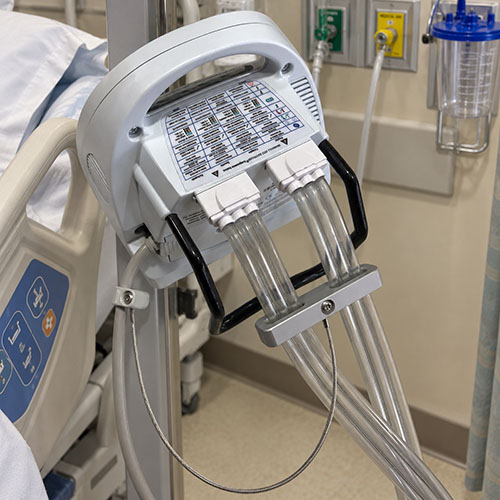
A medical hose lockdown system is designed to keep a detachable hose securely associated with the equipment it supports. Rather than permanently connecting the hose or preventing normal operation, an appropriately designed system provides a physical attachment that helps prevent the accessory from being misplaced. A medical hose lock or security tether can connect the hose to its device, allowing staff to disconnect the hose for its intended use without completely separating it from the equipment. This approach is particularly useful for compression therapy systems, where hoses may need to be unplugged during routine patient care.
Secure Mount’s Medical Compression System Air Hose Lock Down Tether is specifically designed to fit around compatible Covidien/Kendall compression system hoses. Its design allows the hose to be unplugged when necessary while keeping it tethered to the device. This combination of security and accessibility addresses a common challenge: preventing accessory loss without unnecessarily complicating everyday clinical workflows.
How Hose Lockdown Systems Support Biomedical Engineering Teams
Biomedical engineering departments are frequently responsible for inspecting, maintaining, repairing, and managing medical equipment throughout healthcare facilities. Missing accessories can complicate these responsibilities and increase the time required to prepare equipment for use. When detachable hoses remain associated with their devices, biomedical teams can more easily verify that equipment configurations are complete. Medical hose security systems can support several important operational goals.
Reducing Replacement Costs
Replacing missing hoses requires purchasing replacement components, processing orders, and potentially maintaining additional inventory. Securing hoses directly to their devices helps reduce opportunities for accidental separation and loss. Over time, preventing repeated replacements may help facilities control equipment-related expenses.
Improving Equipment Availability
A medical device that is missing a necessary accessory may need to remain out of service until the component is located or replaced. Keeping compression system hoses attached to their respective devices helps maintain more complete equipment configurations. This can reduce avoidable delays associated with searching for missing accessories.
Supporting Equipment Accountability
Hospitals often manage large fleets of similar medical devices. When accessories are interchangeable or look alike, tracking individual components can become challenging. Physical hose retention provides a consistent method for keeping essential accessories with their designated equipment. This makes it easier for staff to identify missing components during inspections and equipment preparation.
Important Features of a Medical Air Hose Tether
Not all hose security products are appropriate for every medical application. Healthcare facilities should evaluate compatibility, construction, accessibility, and cleaning requirements before selecting a solution. For compression therapy equipment, several features deserve particular consideration.
Compatibility With Existing Equipment
A hose lockdown system must accommodate the specific equipment and hose configuration being used. Secure Mount’s Medical Compression System Air Hose Lock Down Tether is designed to fit around Covidien/Kendall compression system hoses. Facilities should verify compatibility with their existing devices before installation.
Durable Construction
Hospital equipment accessories are subjected to frequent handling, movement, and cleaning. Materials should be selected to withstand these conditions. Secure Mount’s hose lockdown tether features a 12-inch stainless steel braided core with a clear, chemical-resistant coating. Anodized aluminum hardware provides additional durability for clinical environments.
Accessibility and Controlled Removal
An effective hose retention system should not prevent staff from operating the equipment as intended. Secure Mount’s design allows compatible compression hoses to be unplugged while remaining tethered to the device. An included security key allows authorized personnel to install or remove the tether when necessary. This provides a balance between routine accessibility and accessory security.
Standardizing Medical Hose Management Across Departments
Individual hose lockdown devices can help prevent losses, but hospitals may achieve greater operational consistency by incorporating them into broader equipment management procedures. Biomedical engineering teams can work with clinical departments to establish standard practices for managing detachable medical accessories.
These practices may include:
- Identifying equipment with frequently lost hoses or accessories
- Selecting compatible hose retention solutions
- Establishing consistent installation procedures
- Including hose security checks in preventive maintenance
- Training staff on proper equipment handling
- Inspecting security attachments during routine equipment audits
Standardization is particularly valuable for large healthcare systems where equipment moves between multiple departments or facilities. Using consistent attachment methods can simplify inspections and help employees recognize when equipment configurations are incomplete.
Cleaning and Routine Maintenance
Medical hose lockdown systems should be incorporated into the facility’s established cleaning and equipment maintenance procedures. The Secure Mount tether’s clear, chemical-resistant coating is designed for easy wipe-down cleaning. Facilities should verify compatibility with their approved cleaning products and follow applicable manufacturer instructions.
Routine inspections should also confirm that the tether remains securely installed, the hose can be connected and disconnected as intended, and the attachment hardware shows no signs of damage or excessive wear. A damaged tether or improperly installed security attachment should be evaluated before the equipment is returned to service.
Expanding Equipment Loss Prevention Beyond Cables
Many hospitals have already implemented cable management and security programs to reduce missing patient monitor leads, power cords, and other detachable accessories. Medical hose lockdown systems extend the same general approach to compression therapy equipment.
By identifying frequently misplaced components and implementing appropriate retention solutions, biomedical teams can develop more comprehensive equipment loss prevention strategies. The goal is not to restrict normal equipment use. Instead, facilities can create consistent methods for keeping essential accessories associated with their devices throughout everyday clinical operations.
Reduce Medical Air Hose Loss With Secure Mount
Preventing medical hose loss starts with keeping essential accessories connected to the equipment they support. For hospitals managing multiple compression therapy devices, a compatible hose lockdown system provides a straightforward way to improve organization and reduce the risk of misplaced components. Secure Mount’s Medical Compression System Air Hose Lock Down Tether is designed specifically for compatible Covidien/Kendall compression system hoses. Its stainless steel construction, chemical-resistant coating, and controlled-release hardware provide a durable solution for keeping hoses associated with their devices while allowing necessary disconnection.
Hospitals can incorporate hose retention into broader equipment standardization and loss prevention programs to help reduce replacement costs and maintain equipment availability. Contact Secure Mount to discuss medical hose lockdown solutions and strategies for securing detachable medical equipment accessories throughout your healthcare facility.