

Cable Organization in Hospitals: Keep Patient Rooms Clean, Safe, and Efficient
Walk into any patient room or clinical workspace and you’ll find a network of cables powering essential care. When those cables are organized, everything runs smoothly. When they’re not, clutter builds, setups become inconsistent, and valuable time is lost. Effective cable organization is a foundational part of hospital operations, helping teams work more efficiently while maintaining a clean, safe, and controlled environment for patient care.
Effective hospital cable organization is more than just keeping things tidy. It plays a direct role in patient safety, infection control, staff efficiency, and equipment longevity. By implementing the right systems and standardizing best practices, healthcare facilities can create cleaner, safer, and more efficient patient care environments.
Why Cable Organization Matters in Hospitals
Cable clutter is a common issue in patient rooms, especially in high-acuity areas like emergency departments and ICUs. When multiple devices are in use, cords can overlap, tangle, or become disconnected, creating confusion for clinical staff.
Poor cable organization can lead to several challenges:
- Safety hazards: Loose or tangled cables increase the risk of trips, falls, and accidental disconnections.
- Equipment delays: Staff may waste valuable time tracing cables or locating missing components.
- Infection control concerns: Disorganized cables are harder to clean and disinfect properly.
- Increased replacement costs: Lost or damaged cables can add up quickly across departments.
Key Principles of Effective Cable Organization
1. Standardization Across Rooms and Departments
One of the most important steps in improving cable organization is standardizing how cables are managed across the facility. When every patient room follows a consistent setup, staff can quickly identify and use equipment without hesitation.
Standardization includes:
- Using consistent cable lengths and tethering methods
- Assigning specific cable positions on equipment
- Implementing uniform mounting and routing systems
2. Securing Cables to Prevent Loss
Medical cables are frequently moved between rooms, devices, and departments. Without proper securing methods, they can easily be misplaced or removed unintentionally.
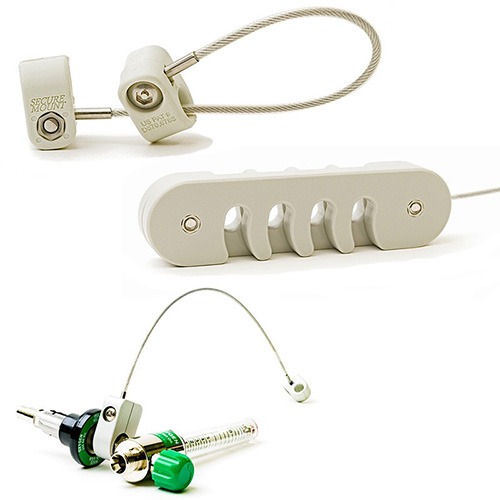
Solutions like cable tethers allow facilities to anchor cables directly to equipment, ensuring they remain available when needed. Using a medical cable tether sample pack can help determine the best fit for various applications and workflows.
3. Organized Cable Routing and Management Systems
Structured cable management systems help keep cords neatly arranged and accessible without interfering with equipment operation.
For example, solutions like a cord management pole system provide a centralized way to organize cables on IV poles and mobile equipment, helping prevent tangling and reduce clutter.
4. Supporting Infection Control Protocols
Disorganized cables create surfaces that are difficult to clean thoroughly, increasing contamination risk.
Well-organized systems support infection control by:
- Reducing contact points and overlapping surfaces
- Allowing easier access for cleaning and disinfection
- Ensuring cables are properly positioned during routine cleaning
5. Improving Workflow Efficiency for Clinical Staff
Effective cable organization streamlines workflows by making cables easy to identify, reducing setup time, and minimizing interruptions during care.
Best Practices for Maintaining Cable Organization
Healthcare facilities can reinforce best practices by:
- Training staff on standardized cable setups
- Conducting regular audits
- Replacing worn components promptly
- Continuously evaluating workflows
Building a Cleaner, Safer Patient Environment
Cable organization has a significant impact on hospital operations, improving safety, infection control, efficiency, and cost management.
Start Improving Your Cable Organization Strategy
If your facility is looking to reduce cable clutter, prevent loss, and improve efficiency, now is the time to evaluate your setup and implement better solutions. Contact Secure Mount today to speak to one of our experts.