

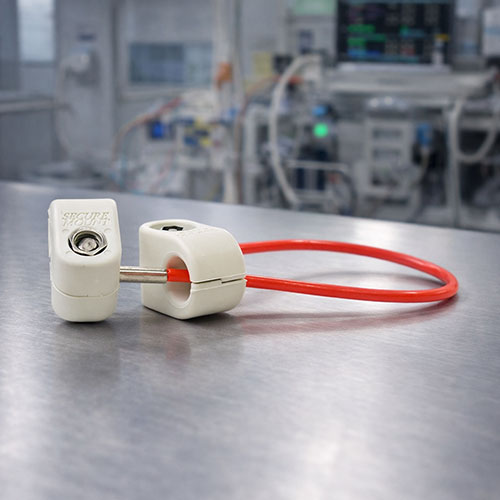
Cord Lock Applications in Healthcare: Securing Critical Hospital Devices
Even small disruptions in a hospital environment can create unnecessary delays for clinical staff. A disconnected power cord, misplaced patient-monitor cable, or missing accessory may prevent equipment from being used when it is needed. Because medical devices are frequently moved between rooms, cleaned, stored, and reconfigured, hospitals need dependable ways to keep essential cords and cables assigned to the correct equipment.
Cord lock solutions help address these challenges by securing cables and power cords to medical equipment, IV poles, carts, headwalls, and other mounting points. Instead of allowing cords to be freely removed or transferred between devices, a hospital cord lock provides controlled cable retention while still allowing authorized staff to access the connection when necessary.
When incorporated into a broader hospital cable management strategy, cord locks can help reduce cable loss, improve equipment organization, limit accidental disconnections, and lower recurring replacement costs. Secure Mount designs cable security and tethering solutions specifically for hospitals and healthcare environments where reliability, durability, and ease of use are important.
What Is a Cord Lock in Healthcare?
A cord lock is a device or system used to keep a cord, cable, lead wire, or equipment accessory secured to its intended location. In healthcare settings, medical cord locks can be used to prevent cables from being unintentionally disconnected, misplaced, transferred to another device, or removed from a patient care area.
Hospital cord lock systems can take several forms depending on the equipment and application. Some solutions physically secure a cable to the medical device itself, while others anchor the cable to an IV pole, monitor stand, headwall, cart, or mounting point. Secure tethering systems can also be used when the cable needs some freedom of movement but should remain assigned to a particular device.
For larger cables or applications requiring a stronger attachment point, an aluminum lock cable security tether can provide added durability while helping hospitals maintain control of valuable medical cables and accessories.
Unlike temporary cable clips or basic organizers, security-focused cord locks are intended to address both organization and loss prevention. Tamper-resistant hardware can further limit removal by requiring a security key or specialized tool for release.
Why Hospital Cord Security Matters
Modern patient care depends on a growing number of electronic devices. Patient monitors, infusion equipment, compression systems, diagnostic devices, mobile carts, and other equipment may each include several cords, leads, hoses, or accessories. As equipment moves throughout a hospital, those components can become separated from the devices they support.
A missing cable may appear to be a relatively small problem, but repeated cable loss can create several larger issues. Staff may have to search other rooms for replacements, biomedical teams may need to locate or reorder accessories, and equipment may temporarily be unavailable because an essential cord is missing.
Hospital cable security helps prevent these issues by keeping components attached to their designated equipment. Rather than relying on staff to remember which cable belongs where, cord locks create a physical connection that helps maintain consistent equipment setups.
This can be particularly valuable in departments where devices are moved frequently or where equipment turnover is high.
Common Cord Lock Applications in Hospitals
Cord locks and cable tethers can be used throughout a healthcare facility wherever cords or accessories are at risk of becoming disconnected or misplaced.
One common application is securing cables to mobile medical equipment. IV poles, monitor stands, carts, and other mobile systems move regularly between patient rooms. When cables are not secured, they may be removed during transport or left behind after equipment is relocated. A cord lock helps keep the cable associated with the equipment as it moves through the facility.
Cord locks can also help protect monitoring cables and lead wires. ECG, SpO2, and other sensor cables may be repeatedly connected and disconnected during normal patient care. Securing these cables to their designated equipment helps reduce the likelihood that they will migrate between rooms or devices.
Hospital headwall equipment is another important application. Flow meters, suction components, and related accessories may be removed during routine use or room turnover. Tethering these components to the headwall setup helps ensure they remain available in the correct location.
Power cords can also benefit from secure retention. Medical equipment power cords and hospital-grade power strips may be mounted or tethered to poles and equipment to prevent removal and reduce unnecessary cord movement.
Preventing Cable Loss and Unnecessary Replacement Costs
Cable replacement can become a significant recurring expense when cords are regularly misplaced. A single lost cable may not seem costly in isolation, but repeated losses across multiple departments and equipment fleets can add up quickly.
A medical cord lock addresses the issue at the source by helping prevent the cable from leaving the equipment in the first place. Instead of continually replacing missing cords, hospitals can use physical cable security to improve accountability and keep accessories where they belong.
Secure Mount medical cable tethers are designed for this type of loss prevention. By securing cables directly to equipment or mounting points, these tethers help facilities reduce cable movement between devices while still allowing the flexibility needed for daily clinical use.
Reducing cable loss can also save staff time. Nurses, technicians, and biomedical personnel spend less time searching for missing accessories or moving cables from one device to another when equipment setups remain complete.
Reducing Accidental Disconnections
Not every cord-related problem involves a missing cable. Loose or poorly managed cords can also be accidentally pulled, unplugged, or strained.
Mobile equipment is particularly vulnerable because cords can catch on nearby objects or become tangled as equipment is repositioned. A properly configured cord lock or tether can help control excessive cable movement while keeping the connection accessible.
This additional control can be useful around IV poles, mobile stands, equipment carts, and bedside devices where multiple cords occupy a relatively small area.
Cord security should not prevent necessary clinical access. The goal is to create a controlled setup in which cables remain secure while authorized staff can still remove or reposition them when required.
Combining Cord Locks With Hospital Cable Management
Cord locks provide the greatest benefit when they are part of a broader cable organization strategy. Securing a cable prevents it from being removed, but the cable must still be routed and stored properly to reduce clutter and improve usability.
Secure Mount’s hospital cable management systems can be used to organize cables along poles, headwalls, monitor rails, and other equipment setups. Combining cable routing with security tethers allows hospitals to address both sides of the problem: cords remain organized while also remaining assigned to the correct equipment.
This approach can help reduce the tangled “spaghetti” appearance common around medical equipment. Keeping cords elevated and organized can also reduce floor-level clutter and make it easier for staff to identify individual cables.
Standardized cable management and cord lock systems can be especially useful for healthcare facilities seeking consistent equipment configurations across multiple rooms or departments.
Cord Locks for IV Poles and Mobile Equipment
IV poles often serve as mobile equipment platforms rather than simply supporting IV bags. Pumps, power strips, wire baskets, cables, and other accessories may all be attached to a single pole.
As the amount of equipment on the pole increases, hospital pole cable management becomes increasingly important. Unsecured cords can hang from the pole, become tangled around the base, or become separated from the equipment during transportation.
Securing and organizing cords directly on the pole creates a more controlled setup. Pole-mounted cable management components can route excess cable length while cable tethers and cord locks keep individual accessories secured.
Secure Mount offers a range of IV pole accessories that can be combined with cable management and tethering components to create equipment configurations suited to different clinical workflows.
Choosing the Right Medical Cord Lock Solution
The appropriate cord lock depends on the type of equipment, cable size, required range of movement, and mounting location. A short tether may be appropriate when a cable only needs to remain attached to a device, while a longer or coiled tether may be necessary when an accessory must move several feet during use.
Healthcare facilities should also consider how frequently the cable must be intentionally removed. Security screws and keyed systems can be useful when removal should be limited to biomedical or maintenance personnel, while other configurations may be better for components that require more frequent access.
Heavy-duty cable tethers may be appropriate for larger cables or high-traffic environments, while color-coded tether systems can add another level of organization by helping staff quickly identify equipment or departmental assignments.
Building a More Consistent Cable Security Strategy
Hospitals do not need to treat every missing cable or disorganized cord as an isolated problem. Implementing standardized cord lock and cable management practices across an equipment fleet can create a more consistent approach to medical cable security.
Standardization can help clinical and biomedical teams know what to expect from room to room. Cables remain in predictable locations, security hardware is installed consistently, and replacement or maintenance procedures become easier to manage.
Over time, this combination of cable organization, security, and loss prevention can help healthcare facilities reduce unnecessary replacement expenses while keeping critical equipment better organized and ready for use.
Secure Critical Medical Cords and Equipment
Cord locks provide hospitals with a practical way to improve cable security, prevent loss, and maintain more organized equipment setups. Whether the goal is securing patient-monitor cables, keeping power cords attached to mobile equipment, protecting headwall accessories, or improving hospital pole cable management, the right cord lock solution can help reduce disruptions and support more efficient clinical workflows.
Secure Mount offers medical cable tethers, cord management systems, security hardware, IV pole accessories, and custom solutions designed specifically for healthcare environments. Contact Secure Mount to discuss your application, speak with a product specialist, or request help identifying a cord lock or cable security solution for your facility.