

How Biomedical Teams Reduce Medical Cable Loss Across Large Hospital Systems
Across large hospital systems, medical equipment is constantly moving between patient rooms, departments, and facilities. While this mobility is essential for patient care, it also creates a persistent challenge for biomedical teams: medical cable loss. Missing monitor leads, power cords, communication cables, and device accessories can create unexpected costs, increase equipment downtime, and disrupt clinical workflows.
Biomedical teams play a critical role in addressing this issue. Through standardized processes, cable management systems, and preventative strategies, they help healthcare organizations reduce loss while improving equipment readiness and operational efficiency.
Why Medical Cable Loss Is a Growing Problem
Modern healthcare facilities rely on a vast network of medical devices. Every infusion pump, patient monitor, workstation, and diagnostic system depends on cables to function properly. Unfortunately, these components are often among the easiest items to lose.
As equipment moves throughout a healthcare system, cables may be removed during cleaning, disconnected during patient transfers, or misplaced when devices are relocated. In some cases, cables are mistakenly swapped between devices or departments.
The result is increased replacement costs, delayed equipment deployment, additional workload for biomedical staff, reduced equipment availability, and inconsistent device configurations.
The Role of Biomedical Engineering Teams
Biomedical engineering departments are often responsible for maintaining equipment functionality and ensuring devices remain available for clinical use. Because of this responsibility, many teams have developed proactive strategies to reduce cable loss and improve accountability.
Rather than simply replacing missing components, leading biomedical teams focus on identifying the root causes of loss and implementing long-term solutions.
Standardizing Equipment Configurations
One of the most effective methods for reducing cable loss is standardization. When devices are configured consistently throughout a facility, staff can quickly identify missing components and recognize when equipment is not set up correctly.
Standardization often includes consistent cable routing methods, uniform cable lengths, standard accessory locations, and consistent labeling practices.
Using Cable Tethers to Prevent Loss
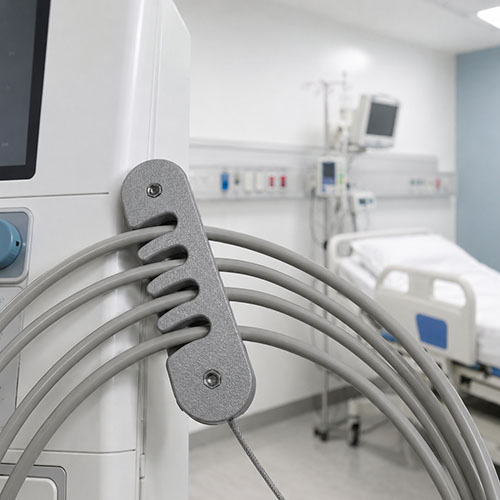
Many healthcare facilities are implementing cable tether systems to physically secure cables to equipment. By attaching cables directly to devices, biomedical teams can significantly reduce the likelihood of components becoming separated or misplaced.
Cable tether systems help ensure that essential accessories remain with the equipment they support, improving accountability while reducing replacement costs.
Implementing Color-Coded Identification Systems
Color coding is another valuable strategy used by biomedical teams. Color-coded cable management systems allow staff to quickly identify cables associated with specific departments, equipment types, or device fleets.
Visual identification reduces setup errors and makes it easier to verify that equipment configurations remain consistent across multiple locations.
Supporting Better Asset Tracking
Biomedical teams frequently work with facilities and clinical staff to improve asset tracking processes through equipment audits, inventory management programs, preventative maintenance inspections, and accountability procedures.
Training Clinical Staff
Technology solutions alone cannot eliminate cable loss. Successful programs also include staff education on proper cable organization procedures, equipment transportation practices, standardized device setups, and reporting damaged or missing components.
Improving Equipment Availability
One of the biggest benefits of reducing cable loss is improved equipment readiness. Devices that are missing critical accessories may need to be removed from service until replacement components are obtained. Keeping cables attached, organized, and accounted for helps ensure equipment remains available when clinicians need it most.
Creating a System-Wide Strategy
The most successful medical cable loss prevention programs take a system-wide approach. Rather than addressing individual incidents, healthcare organizations establish policies and procedures that promote consistency across all departments.
Reducing Costs While Improving Efficiency
Medical cable loss may seem like a minor issue, but the cumulative impact across a large hospital system can be substantial. Replacement costs, labor expenses, equipment downtime, and workflow disruptions all contribute to the overall burden.
Start Building a Better Cable Management Strategy
Biomedical engineering teams are uniquely positioned to lead cable loss prevention initiatives. Through standardization, accountability, and the right cable management solutions, healthcare organizations can significantly reduce loss while improving device readiness and clinical efficiency.
Contact Secure Mount to learn more about cable management and cable security solutions designed specifically for healthcare environments.