

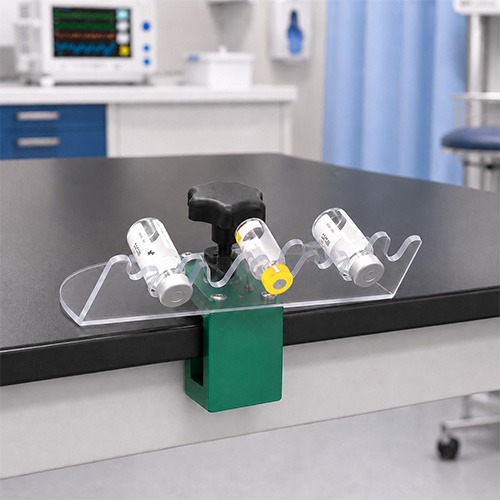
Medical Vial Holders: Improving Medication Organization at the Point of Care
Medication preparation and administration often involve small components that must remain visible, accessible, and properly organized. Vials may contain medications needed for routine treatment, emergency response, anesthesia, or specialized procedures. When these small containers are placed loosely on trays, counters, or mobile equipment, they can be difficult to manage and easier to misplace.
A medical vial holder provides a designated location for organizing medication vials at the point of care. By keeping vials upright, separated, and within reach, healthcare teams can create more orderly work areas and reduce the time spent searching for small supplies. The right vial organization system can support clinical efficiency while helping facilities maintain more consistent equipment setups across patient rooms, treatment areas, and mobile workstations.
Why Medication Organization Matters at the Point of Care
Point-of-care environments are often busy and space is limited. Nurses, technicians, and other clinical staff may need to manage medications alongside syringes, tubing, monitoring equipment, documentation, and other supplies. Without a defined storage location, vials can become mixed with unrelated items or placed in areas where they are difficult to see.
Disorganization can contribute to several operational challenges:
- Staff may spend additional time locating the correct vial.
- Small containers can roll, tip over, or become hidden beneath other supplies.
- Work surfaces can become cluttered and harder to clean.
- Equipment setups may vary significantly between rooms or departments.
- Vials may be returned to an incorrect location after use.
A dedicated vial organizer does not replace proper medication verification or hospital procedures. However, it can support those procedures by providing a more controlled and predictable place for holding vials during care.
What Is a Medical Vial Holder?
A medical vial holder is an accessory designed to keep medication vials upright and organized. Depending on the design, it may attach to an IV pole, equipment stand, mobile workstation, rail, or other point-of-care setup.
The primary purpose of the holder is simple: give small vials a stable, visible location rather than allowing them to remain loose on a tray or work surface.
A well-designed medicine vial holder can help staff:
- Keep frequently used vials within easy reach.
- Separate vials from other supplies.
- Maintain a more consistent equipment layout.
- Reduce the risk of containers rolling or tipping.
- Improve visibility during preparation and routine equipment checks.
Because point-of-care needs vary, hospitals should evaluate vial holders based on the number and size of vials being used, the available mounting location, and the workflow of the clinical team.
Supporting More Efficient Clinical Workflows
Efficiency at the point of care often depends on small improvements in equipment placement and accessibility. When staff know exactly where supplies are located, they can move through routine tasks with fewer interruptions.
A medical vial holder can help reduce unnecessary movement by placing vials near the equipment or workstation where they are used. Instead of reaching across a room, opening multiple drawers, or searching through a crowded tray, staff can quickly identify the designated vial location.
This can be particularly useful in areas where equipment configurations are repeated across multiple rooms. Standardizing the placement of vial holders allows employees to encounter a familiar setup regardless of which room or unit they are working in.
Consistency can also simplify room preparation. Staff responsible for setting up equipment can quickly confirm whether the holder is stocked appropriately and whether any required items are missing.
Keeping Small Medication Containers Visible
One of the biggest challenges with vial storage is visibility. Medication vials are small and can easily become obscured by larger supplies. If multiple vials are placed together without organization, staff may need to move or handle several containers to locate the correct one.
An upright vial stand creates clear separation between containers and helps keep labels more visible. Better visibility can support faster identification while reducing excessive handling.
Hospitals should still follow all medication labeling, verification, storage, and administration policies. A holder is an organizational accessory, not a substitute for clinical safeguards. Its value comes from helping staff maintain a clearer and more orderly work area in which established procedures can be followed.
Reducing Clutter on Trays and Work Surfaces
Countertops, carts, and equipment trays can quickly become overcrowded in patient care areas. Loose vials take up valuable surface space and may interfere with other supplies.
Moving vials into a dedicated holder can free up room for the materials that must remain on the primary work surface. This separation can make the overall setup easier to navigate and may improve access during routine cleaning.
A cleaner equipment arrangement also makes it easier for staff to notice when something is out of place. When every accessory has a defined location, missing or misplaced items become more apparent.
Standardizing Medication Organization Across Departments
Large healthcare systems often manage equipment across numerous departments, each with different workflows and staffing patterns. When every unit develops its own method for storing small supplies, equipment layouts can become inconsistent.
Standardization helps create predictable setups. A facility may establish guidelines for where vial holders should be mounted, what types of equipment should include them, and how they should be incorporated into room preparation procedures.
Standardized placement can benefit:
- Patient rooms
- Emergency departments
- Intensive care units
- Procedure rooms
- Surgical environments
- Mobile medication or equipment stations
- Equipment storage and staging areas
A consistent approach can make it easier for staff members who rotate between departments to locate supplies and work efficiently.
Integrating Vial Holders with Mobile Medical Equipment
Many point-of-care systems are mobile. IV poles, equipment stands, carts, and workstations may be moved between rooms throughout the day. Supplies stored loosely on these systems can shift, tip, or be left behind during transport.
Mounting a vial holder directly to the equipment helps keep the organization system with the mobile unit. This allows the holder to remain in the same relative position as the equipment moves.
Secure Mount’s medical vial holder provides a dedicated way to organize vials as part of a point-of-care equipment setup. Incorporating the holder into the equipment configuration can help facilities maintain a more consistent and accessible storage location without relying solely on nearby counters or separate trays.
When selecting a mounting location, facilities should consider whether the holder will remain easy to reach while staying clear of device controls, cables, tubing, and movement paths.
Supporting Cleaning and Routine Equipment Checks
Hospital equipment and accessories must be incorporated into regular cleaning and inspection procedures. Disorganized supplies can make it harder to access surfaces and identify areas requiring attention.
Keeping vials in a designated holder may reduce the number of loose items that need to be moved during cleaning. It also creates a consistent accessory location that can be included in routine equipment checks.
Facilities should select holders made from materials appropriate for the intended clinical environment and follow the manufacturer’s cleaning recommendations. The holder should also be inspected periodically for wear, damage, or mounting issues.
Choosing the Right Vial Holder
Before selecting a vial holder, healthcare teams should evaluate how it will be used within the existing workflow.
Important considerations include:
- The diameter and height of the vials being stored
- The number of vials that need to be accessible
- The mounting surface or pole size
- Available space around other equipment
- Access during medication preparation
- Cleaning and maintenance requirements
- Whether the equipment is stationary or mobile
Input from clinical staff, biomedical engineering, infection prevention, and facilities teams can help ensure the selected solution works well within the broader equipment setup.
Building a More Organized Point-of-Care Environment
Medication organization is one part of creating an efficient patient care environment. Small accessories such as vial holders can have a meaningful impact when they are selected carefully and incorporated into standardized workflows.
By keeping vials upright, visible, and close to the point of use, healthcare facilities can reduce clutter and make better use of limited workspace. Consistent placement can also help staff move more efficiently between rooms and identify missing supplies sooner.
For hospitals looking to improve vial organization, Secure Mount offers a practical solution designed to integrate with point-of-care medical equipment. Explore the medical vial holder to determine whether it fits your facility’s equipment configurations and medication organization needs.